
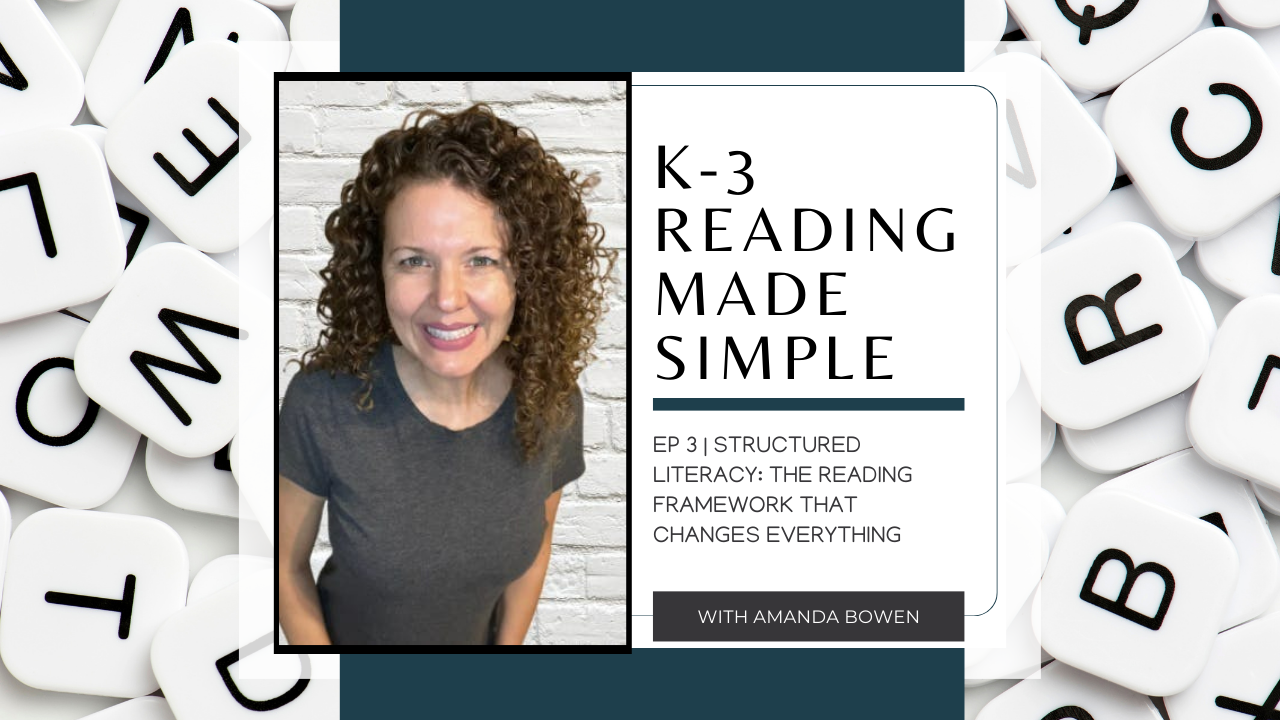
Science of Reading Explicit Instruction: Structured Literacy Instructional Methods That Teach Reading Strategies for Today’s Classrooms
If you have ever watched a student try so hard to read, sounding out, guessing, and hoping it will click, you are not alone. Many teachers enter the classroom with new teacher questions about how to truly support early readers.
In this episode, literacy educator Amanda Bowen explains why structured literacy instructional methods are transforming the way educators approach teaching literacy and how they align with science of reading explicit instruction.
Listen to the episode here
Why Reading Does Not Develop Naturally for Most Students
One of the biggest misconceptions in education is that reading develops on its own with enough exposure. Research shows that most students learn to read when instruction is:
-
Explicit
-
Systematic
-
Intentional
-
Focused on language structure
This is the foundation of science of reading explicit instruction and the reason structured literacy instructional methods are now considered the gold standard for teaching literacy.
What Structured Literacy Really Means
Structured literacy is not a program or a boxed curriculum. It is a framework for teaching literacy that focuses on the structure of language. That includes:
-
Phonology and phonemic awareness
-
Sound symbol relationships
-
Syllable types and word patterns
-
Morphology and meaning
-
Syntax and sentence structure
When teachers understand how language works, they can teach reading strategies that give students real tools instead of guessing habits.
How Structured Literacy Supports All Learners
Structured literacy instructional methods benefit every student, but they are especially powerful for:
-
Struggling readers
-
Students with dyslexia
-
English learners
-
Students who need explicit modeling
Instead of leaving reading success to chance, these methods provide clarity and predictability so students know how to approach unfamiliar words.
Practical Ways to Start Using Explicit Instruction
If you are wondering how to move from theory to practice, here are simple steps that reflect science of reading explicit instruction:
-
Model how to break apart sounds in words
-
Teach phonics patterns directly instead of incidentally
-
Use cumulative review so skills build over time
-
Connect decoding to vocabulary and comprehension
-
Give students guided practice before independent reading
These strategies help answer many of the new teacher questions that arise when educators begin shifting their reading instruction.
Want tools that make this shift easier?
Get the 3 Must Have Apps now at https://msamandabowen.com/free/
These tools support structured literacy routines and help you implement teach reading strategies without adding more overwhelm to your planning.
Encouragement for Teachers Learning Something New
If you still feel like you are figuring reading instruction out, that does not mean you are behind. It means you are growing.
Every time you refine how you teach reading, your students benefit. Teaching literacy is complex work, and learning how to align with science of reading explicit instruction is part of becoming a stronger educator.
Watch the Full Episode
You can watch the full podcast episode here:
Ep 3 | Science of Reading Explicit Instruction: Structured Literacy Instructional Methods That Teach Reading Strategies for Today’s Classrooms